Buy wcsitz.eu ?
We are moving the project
wcsitz.eu .
Are you interested in purchasing the domain
wcsitz.eu ?
domain@kv-gmbh.de · 0541-91531010
Buy wcsitz.eu ?
Do tomatoes taste chemically?
Tomatoes do not taste chemically. The taste of tomatoes is a result of the natural compounds present in the fruit, such as sugars, acids, and volatile compounds. These compounds contribute to the sweet, tangy, and savory flavor of tomatoes. While tomatoes may be treated with chemicals during cultivation, the taste of the fruit itself is not chemically derived. **
Why does glass shatter chemically?
Glass shatters chemically because of the way its molecular structure responds to stress. Glass is an amorphous solid, meaning its molecules are not arranged in a regular pattern like in a crystalline solid. When stress is applied to glass, the disordered molecular structure makes it more susceptible to breaking. Additionally, the presence of microscopic flaws or impurities in the glass can also contribute to its tendency to shatter when subjected to force. **
Similar search terms for Chemically
Top-Angebote
Products related to Chemically:
-
Nutri Ox Thinning Hair System 30-Day Starter Kit for Colored/Chemically-Treated HairTHICKER, FULLER-LOOKING HAIR IN JUST ONE WEEK* The Nutri-Ox® 3-Step System of Gentle Shampoo, Fortifying Conditioner and Densifying Tonic, formulated for fragile, color-treated, highlighted or permed hair, helps maintain the optimum scalp...30,49 $*Shipping: 0,00 $Secure redirect to the provider
-
HOOOWOOO Modern Ergonomic Adjustable PU Curved Office ChairTransform your workspace with the Ergonomic Adjustable PU Curved Office Chair by HOOOWOOO. Featuring curved backrest and U-shaped design, this chair not only offer back and lumbar support, but also save space for more area.125,99 $*Shipping: 0,00 $Secure redirect to the provider
-
Curved Modern Upholstered Accent Armchair, Compact Space-Saving Lounge Chair with Ergonomic Contoured BackrestBring sculptural comfort and modern elegance into your home with this beautifully curved accent chair designed for effortless relaxation.365,99 $*Shipping: 0,00 $Secure redirect to the provider




-
Is it always chemically treated?
No, not all wool is chemically treated. Some wool is processed using environmentally friendly methods that do not involve chemical treatments. However, some wool may undergo chemical treatments to achieve certain properties such as softness, colorfastness, or resistance to shrinking. It is important to check the label or inquire with the manufacturer to determine if the wool has been chemically treated. **
-
How does tartar form chemically?
Tartar, also known as dental calculus, forms chemically through a process called mineralization. This occurs when plaque, a sticky film of bacteria and food particles, is not removed from the teeth and hardens into tartar. The minerals in saliva, such as calcium and phosphate, combine with the bacteria and food particles in the plaque to form a hard, yellowish deposit on the teeth. Once tartar has formed, it can only be removed by a dental professional using specialized tools. **
-
What happens chemically when iodine sublimes?
When iodine sublimes, it undergoes a phase transition from a solid to a gas without passing through the liquid phase. This process occurs due to the weak intermolecular forces between iodine molecules, which allows them to easily transition from a solid to a gas. The sublimation of iodine is an endothermic process, meaning it requires energy input to break the intermolecular forces holding the solid together. **
-
Why can't polyester be dyed chemically?
Polyester is a synthetic fiber made from petroleum-based products, which makes it difficult for dyes to chemically bond with the fibers. Unlike natural fibers such as cotton or wool, polyester does not have the same chemical structure that allows for easy dye absorption. Additionally, the smooth surface of polyester fibers repels water-based dyes, making it challenging for the dye to penetrate and adhere to the fibers. As a result, polyester is typically dyed using a process called disperse dyeing, where the dye is dispersed in a hot water bath and forced into the fibers under high pressure and temperature. **


How can one compare dyes chemically?
One can compare dyes chemically by analyzing their molecular structure, composition, and chemical properties. Techniques such as spectroscopy, chromatography, and mass spectrometry can be used to identify the specific chemical components of dyes and compare their similarities and differences. Additionally, chemical tests can be performed to determine the reactivity and behavior of dyes under different conditions. By examining these chemical characteristics, one can make comparisons between different dyes and understand their chemical properties. **
How do you chemically calculate 120?
To chemically calculate 120, you would use the chemical formula for the element or compound you are working with. For example, to calculate the molar mass of a compound like glucose (C6H12O6), you would add up the atomic masses of each element in the compound: 6 carbon atoms (12.01 g/mol each), 12 hydrogen atoms (1.01 g/mol each), and 6 oxygen atoms (16.00 g/mol each). This would give you a molar mass of 180.18 g/mol for glucose. If you are calculating the number of moles in a given mass of a substance, you would use the formula moles = mass/molar mass. **
Top-Angebote
Products related to Chemically:
-
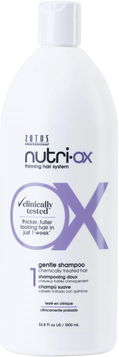
Nutri Ox Gentle Shampoo Chemically Treated Hair 33.8 ozTHICKER, FULLER-LOOKING HAIR IN JUST ONE WEEK* Nutri-Ox® Gentle Shampoo, for chemically & color-treated hair, removes excess folicle-clogging sebum to help maintain the optimal scalp environment for healthy-looking hair. Scalp feels refreshed & hair...29,99 $*Shipping: 0,00 $Secure redirect to the provider
-
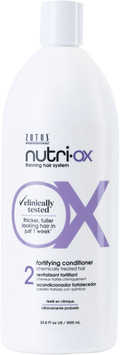
Nutri Ox Fortifying Conditioner Chemically-Treated Hair 33.8 ozTHICKER, FULLER-LOOKING HAIR IN JUST ONE WEEK* Nutri-Ox® Fortifying Conditioner, for colored or chemically-treated hair, conditions from root to tip to help maintain the optimal scalp environment for healthy-looking hair that doesn't feel weighed...29,99 $*Shipping: 0,00 $Secure redirect to the provider
-
Nutri Ox Thinning Hair System 30-Day Starter Kit for Colored/Chemically-Treated HairTHICKER, FULLER-LOOKING HAIR IN JUST ONE WEEK* The Nutri-Ox® 3-Step System of Gentle Shampoo, Fortifying Conditioner and Densifying Tonic, formulated for fragile, color-treated, highlighted or permed hair, helps maintain the optimum scalp...30,49 $*Shipping: 0,00 $Secure redirect to the provider
-
HOOOWOOO Modern Ergonomic Adjustable PU Curved Office ChairTransform your workspace with the Ergonomic Adjustable PU Curved Office Chair by HOOOWOOO. Featuring curved backrest and U-shaped design, this chair not only offer back and lumbar support, but also save space for more area.125,99 $*Shipping: 0,00 $Secure redirect to the provider
-
Do tomatoes taste chemically?
Tomatoes do not taste chemically. The taste of tomatoes is a result of the natural compounds present in the fruit, such as sugars, acids, and volatile compounds. These compounds contribute to the sweet, tangy, and savory flavor of tomatoes. While tomatoes may be treated with chemicals during cultivation, the taste of the fruit itself is not chemically derived. **
-
Why does glass shatter chemically?
Glass shatters chemically because of the way its molecular structure responds to stress. Glass is an amorphous solid, meaning its molecules are not arranged in a regular pattern like in a crystalline solid. When stress is applied to glass, the disordered molecular structure makes it more susceptible to breaking. Additionally, the presence of microscopic flaws or impurities in the glass can also contribute to its tendency to shatter when subjected to force. **
-
Is it always chemically treated?
No, not all wool is chemically treated. Some wool is processed using environmentally friendly methods that do not involve chemical treatments. However, some wool may undergo chemical treatments to achieve certain properties such as softness, colorfastness, or resistance to shrinking. It is important to check the label or inquire with the manufacturer to determine if the wool has been chemically treated. **
-
How does tartar form chemically?
Tartar, also known as dental calculus, forms chemically through a process called mineralization. This occurs when plaque, a sticky film of bacteria and food particles, is not removed from the teeth and hardens into tartar. The minerals in saliva, such as calcium and phosphate, combine with the bacteria and food particles in the plaque to form a hard, yellowish deposit on the teeth. Once tartar has formed, it can only be removed by a dental professional using specialized tools. **
Similar search terms for Chemically
-
Curved Modern Upholstered Accent Armchair, Compact Space-Saving Lounge Chair with Ergonomic Contoured BackrestBring sculptural comfort and modern elegance into your home with this beautifully curved accent chair designed for effortless relaxation.365,99 $*Shipping: 0,00 $Secure redirect to the provider
-
GREATPLANINC Stylish Office Chair Ergonomic Chair Vanity Chair with Adjustable Height Swivel Chair Executive Chair for BedroomThe wider and deeper seat design ensures ample space, while the 40° reclining chassis allows you to relax during breaks. Built with a sturdy 320mm base, this chair offers both style and stability for any workspace.163,49 $*Shipping: 0,00 $Secure redirect to the provider
-
What happens chemically when iodine sublimes?
When iodine sublimes, it undergoes a phase transition from a solid to a gas without passing through the liquid phase. This process occurs due to the weak intermolecular forces between iodine molecules, which allows them to easily transition from a solid to a gas. The sublimation of iodine is an endothermic process, meaning it requires energy input to break the intermolecular forces holding the solid together. **
-
Why can't polyester be dyed chemically?
Polyester is a synthetic fiber made from petroleum-based products, which makes it difficult for dyes to chemically bond with the fibers. Unlike natural fibers such as cotton or wool, polyester does not have the same chemical structure that allows for easy dye absorption. Additionally, the smooth surface of polyester fibers repels water-based dyes, making it challenging for the dye to penetrate and adhere to the fibers. As a result, polyester is typically dyed using a process called disperse dyeing, where the dye is dispersed in a hot water bath and forced into the fibers under high pressure and temperature. **
-
How can one compare dyes chemically?
One can compare dyes chemically by analyzing their molecular structure, composition, and chemical properties. Techniques such as spectroscopy, chromatography, and mass spectrometry can be used to identify the specific chemical components of dyes and compare their similarities and differences. Additionally, chemical tests can be performed to determine the reactivity and behavior of dyes under different conditions. By examining these chemical characteristics, one can make comparisons between different dyes and understand their chemical properties. **
-
How do you chemically calculate 120?
To chemically calculate 120, you would use the chemical formula for the element or compound you are working with. For example, to calculate the molar mass of a compound like glucose (C6H12O6), you would add up the atomic masses of each element in the compound: 6 carbon atoms (12.01 g/mol each), 12 hydrogen atoms (1.01 g/mol each), and 6 oxygen atoms (16.00 g/mol each). This would give you a molar mass of 180.18 g/mol for glucose. If you are calculating the number of moles in a given mass of a substance, you would use the formula moles = mass/molar mass. **
* All prices are inclusive of VAT and, if applicable, plus shipping costs. The offer information is based on the details provided by the respective shop and is updated through automated processes. Real-time updates do not occur, so deviations can occur in individual cases. ** Note: Parts of this content were created by AI.