Buy wcsitz.eu ?
We are moving the project
wcsitz.eu .
Are you interested in purchasing the domain
wcsitz.eu ?
domain@kv-gmbh.de · 0541-91531010
Buy wcsitz.eu ?
Is the square axis-symmetric, but not point-symmetric?
Yes, a square is axis-symmetric, meaning it has rotational symmetry around its center axis. However, it is not point-symmetric, as it does not have reflectional symmetry across any point within the shape. This is because a square does not have a point that can be reflected across to create a matching image. **
Can a rational function be both axis-symmetric and point-symmetric?
No, a rational function cannot be both axis-symmetric and point-symmetric. If a rational function is axis-symmetric, it means that it is symmetric with respect to the y-axis, while point-symmetry would require symmetry with respect to the origin. These two types of symmetry are mutually exclusive, so a rational function cannot exhibit both types of symmetry simultaneously. **

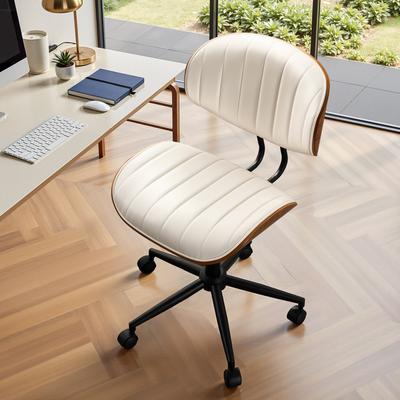
Similar search terms for Symmetric
Top-Angebote
Products related to Symmetric:
-
Curved Modern Upholstered Accent Armchair, Compact Space-Saving Lounge Chair with Ergonomic Contoured BackrestBring sculptural comfort and modern elegance into your home with this beautifully curved accent chair designed for effortless relaxation.365,99 $*Shipping: 0,00 $Secure redirect to the provider
-
GREATPLANINC Stylish Office Chair Ergonomic Chair Vanity Chair with Adjustable Height Swivel Chair Executive Chair for BedroomThe wider and deeper seat design ensures ample space, while the 40° reclining chassis allows you to relax during breaks. Built with a sturdy 320mm base, this chair offers both style and stability for any workspace.163,49 $*Shipping: 0,00 $Secure redirect to the provider




-
Which capital and lowercase letters are rotationally symmetric and reflection symmetric?
The capital letters that are both rotationally symmetric and reflection symmetric are "I", "O", "S", "H", "X", and "Z". The lowercase letters that are both rotationally symmetric and reflection symmetric are "o" and "x". These letters look the same when rotated 180 degrees or when reflected across a vertical line. **
-
Which uppercase and lowercase letters are rotationally symmetric and reflection symmetric?
The uppercase letters that are both rotationally symmetric and reflection symmetric are 'H', 'I', 'N', 'O', 'S', 'X', and 'Z'. The lowercase letters that are both rotationally symmetric and reflection symmetric are 'o' and 'x'. These letters look the same when rotated 180 degrees or when reflected across a vertical axis. **
-
Can a polynomial function be both axis-symmetric and point-symmetric?
No, a polynomial function cannot be both axis-symmetric and point-symmetric. If a polynomial function is axis-symmetric, it means that it is symmetric with respect to the y-axis, while if it is point-symmetric, it means that it is symmetric with respect to the origin. These two types of symmetry are mutually exclusive, so a polynomial function cannot exhibit both types of symmetry simultaneously. **
-
Which capital letters of the alphabet are point-symmetric and axis-symmetric?
The capital letters of the alphabet that are both point-symmetric and axis-symmetric are the letter "H" and the letter "I". These letters have vertical symmetry as well as symmetry when rotated 180 degrees. This means that they look the same when flipped vertically or rotated 180 degrees around their center point. **


Which capital letters of the alphabet are point symmetric and axis symmetric?
The capital letters of the alphabet that are point symmetric are A, H, I, M, O, T, U, V, W, X, and Y. These letters look the same when rotated 180 degrees around their center point. The capital letters that are axis symmetric are A, H, I, M, O, T, U, V, W, X, and Y. These letters look the same when reflected across a vertical axis. **
Does "symmetric to the origin" always mean point symmetric in profile tasks?
No, "symmetric to the origin" does not always mean point symmetric in profile tasks. In profile tasks, "symmetric to the origin" means that the object is symmetric with respect to the origin of the coordinate system, which is the point (0,0). This means that if you reflect the object across the x-axis and the y-axis, it will look the same. Point symmetry, on the other hand, means that the object is symmetric with respect to a specific point, not necessarily the origin. Therefore, while point symmetry implies symmetry to the origin, symmetry to the origin does not always imply point symmetry in profile tasks. **
Top-Angebote
Products related to Symmetric:
-
HOOOWOOO Modern Ergonomic Adjustable PU Curved Office ChairTransform your workspace with the Ergonomic Adjustable PU Curved Office Chair by HOOOWOOO. Featuring curved backrest and U-shaped design, this chair not only offer back and lumbar support, but also save space for more area.125,99 $*Shipping: 0,00 $Secure redirect to the provider
-
Curved Modern Upholstered Accent Armchair, Compact Space-Saving Lounge Chair with Ergonomic Contoured BackrestBring sculptural comfort and modern elegance into your home with this beautifully curved accent chair designed for effortless relaxation.365,99 $*Shipping: 0,00 $Secure redirect to the provider
-
Is the square axis-symmetric, but not point-symmetric?
Yes, a square is axis-symmetric, meaning it has rotational symmetry around its center axis. However, it is not point-symmetric, as it does not have reflectional symmetry across any point within the shape. This is because a square does not have a point that can be reflected across to create a matching image. **
-
Can a rational function be both axis-symmetric and point-symmetric?
No, a rational function cannot be both axis-symmetric and point-symmetric. If a rational function is axis-symmetric, it means that it is symmetric with respect to the y-axis, while point-symmetry would require symmetry with respect to the origin. These two types of symmetry are mutually exclusive, so a rational function cannot exhibit both types of symmetry simultaneously. **
-
Which capital and lowercase letters are rotationally symmetric and reflection symmetric?
The capital letters that are both rotationally symmetric and reflection symmetric are "I", "O", "S", "H", "X", and "Z". The lowercase letters that are both rotationally symmetric and reflection symmetric are "o" and "x". These letters look the same when rotated 180 degrees or when reflected across a vertical line. **
-
Which uppercase and lowercase letters are rotationally symmetric and reflection symmetric?
The uppercase letters that are both rotationally symmetric and reflection symmetric are 'H', 'I', 'N', 'O', 'S', 'X', and 'Z'. The lowercase letters that are both rotationally symmetric and reflection symmetric are 'o' and 'x'. These letters look the same when rotated 180 degrees or when reflected across a vertical axis. **
Similar search terms for Symmetric
-
GREATPLANINC Stylish Office Chair Ergonomic Chair Vanity Chair with Adjustable Height Swivel Chair Executive Chair for BedroomThe wider and deeper seat design ensures ample space, while the 40° reclining chassis allows you to relax during breaks. Built with a sturdy 320mm base, this chair offers both style and stability for any workspace.163,49 $*Shipping: 0,00 $Secure redirect to the provider
-
GREATPLANINC Stylish Swivel Chair Office Chair Ergonomic Chair with Curved Seat and Adjustable Height Executive Chair Vanity Chair,BrownElevate your workspace with this sleek swivel chair, combining comfort and style with its curved seat and soft faux leather upholstery.115,98 $*Shipping: 0,00 $Secure redirect to the provider
-
HOOOWOOO Modern Ergonomic Adjustable PU Curved Office ChairTransform your workspace with the Ergonomic Adjustable PU Curved Office Chair by HOOOWOOO. Featuring curved backrest and U-shaped design, this chair not only offer back and lumbar support, but also save space for more area.122,21 $*Shipping: 0,00 $Secure redirect to the provider
-
Can a polynomial function be both axis-symmetric and point-symmetric?
No, a polynomial function cannot be both axis-symmetric and point-symmetric. If a polynomial function is axis-symmetric, it means that it is symmetric with respect to the y-axis, while if it is point-symmetric, it means that it is symmetric with respect to the origin. These two types of symmetry are mutually exclusive, so a polynomial function cannot exhibit both types of symmetry simultaneously. **
-
Which capital letters of the alphabet are point-symmetric and axis-symmetric?
The capital letters of the alphabet that are both point-symmetric and axis-symmetric are the letter "H" and the letter "I". These letters have vertical symmetry as well as symmetry when rotated 180 degrees. This means that they look the same when flipped vertically or rotated 180 degrees around their center point. **
-
Which capital letters of the alphabet are point symmetric and axis symmetric?
The capital letters of the alphabet that are point symmetric are A, H, I, M, O, T, U, V, W, X, and Y. These letters look the same when rotated 180 degrees around their center point. The capital letters that are axis symmetric are A, H, I, M, O, T, U, V, W, X, and Y. These letters look the same when reflected across a vertical axis. **
-
Does "symmetric to the origin" always mean point symmetric in profile tasks?
No, "symmetric to the origin" does not always mean point symmetric in profile tasks. In profile tasks, "symmetric to the origin" means that the object is symmetric with respect to the origin of the coordinate system, which is the point (0,0). This means that if you reflect the object across the x-axis and the y-axis, it will look the same. Point symmetry, on the other hand, means that the object is symmetric with respect to a specific point, not necessarily the origin. Therefore, while point symmetry implies symmetry to the origin, symmetry to the origin does not always imply point symmetry in profile tasks. **
* All prices are inclusive of VAT and, if applicable, plus shipping costs. The offer information is based on the details provided by the respective shop and is updated through automated processes. Real-time updates do not occur, so deviations can occur in individual cases. ** Note: Parts of this content were created by AI.